
Published on:
The 5 Biggest Mistakes New Crypto Terminal Operators Make in Their First 90 Days

Quick Answer: The five most common mistakes new crypto payment terminal operators make in their first 90 days are: targeting the wrong merchant types, skipping the fee math conversation with the owner, placing in low-volume locations, going dark after placement, and never tracking residual growth against a projection. None of these are fatal. All of them are preventable. The operators who build $3,000–$5,000/month portfolios in their first year make the same number of placements as the ones who stall — they just avoid these five errors while doing it.
I've watched a lot of people start this business.
Some of them build consistent, growing residual income within six months. Some stall at two or three placements and never get moving again. The difference is rarely effort. It's rarely work ethic. The people who come to Dividend Shift are not lazy people. They are former cops, veterans, tradespeople, and corporate managers who know how to work.
The difference is almost always one of five specific mistakes made in the first 90 days — before the portfolio has enough active accounts to be self-sustaining, when the early errors compound the hardest.
I'm going to lay all five out plainly, the way I wish someone had laid them out for me when I was starting. If you're in the first 90 days, read this slowly. If you're evaluating whether to start, read it so you know what to expect.
Mistake #1: Targeting the Wrong Merchant Types First
This is the one that costs new operators the most time, and it happens because the pitch feels easier in the wrong rooms.
New operators walk into high-volume convenience stores, gas stations, quick-service lunch spots, and franchise locations because those businesses feel approachable. High foot traffic. Busy registers. Lots of transactions.
All of that is true. None of it makes them a good first target.
Here's why. A gas station processes hundreds of transactions per day — most of them between $30 and $60. A quick-service counter processes $8–$15 tickets at a pace that doesn't tolerate any payment friction. For a crypto terminal to generate meaningful residual income, transaction volume has to be high and average ticket size has to justify the processing math. At $12 average ticket, a 0.5%–1% residual earns you $0.06–$0.12 per transaction. You need thousands of monthly transactions to make that location worth the placement.
The other problem with franchises and chain locations is structural: the person behind the counter doesn't own the payment stack. A Subway franchisee often can't change their payment processor. A corporate-owned retail location runs centralized payment systems decided by a headquarters team you'll never meet. You can have the best conversation in the world and it changes nothing, because the decision isn't the owner's to make.
The right first targets are owner-operated businesses with average ticket sizes above $100, processing fees currently above 2.5%, and a decision-maker on-site when you walk in. Auto shops. Dental offices. Independent jewelers. Specialty retail — electronics, supplements, sporting goods. These are the rooms where the owner feels their processing fees personally, has had customers ask about crypto, and can say yes to you on the same day you walk in.
The checklist I give every new partner: average ticket over $100, processing fees above 2.5%, owner-operated, owner under 55, business open at least two years, customer base skewing 25–50 years old. A merchant hitting four of those six criteria is worth the conversation. One hitting all six is your first call Monday morning.
Stop going into the easy-feeling rooms. Start going into the right rooms.
Mistake #2: Skipping the Fee Math Conversation
New operators get nervous about the merchant conversation. So they soften it. They lead with the product instead of the problem.
"We have a crypto payment terminal that lets your customers pay with Bitcoin and Ethereum." That's a product pitch. The merchant hears it and immediately thinks: my customers don't use crypto, this is complicated, I don't need another thing to manage.
The conversation closes before it opens.
The right conversation is a math conversation, and it starts with one question: what are you currently paying your card processor per transaction?
Most owners know. They feel that number every month when they look at their statement. Standard Stripe and Square published rates run 2.9% plus $0.30 per transaction. Premium rewards cards — the ones customers love because they earn airline miles — push the merchant's actual effective rate to 4.5%–6% of transaction value. On a $1,000 auto repair, the merchant is handing $29–$60 to the processor before a single dollar reaches their pocket.
Your terminal offers them 0.5%–1% on the same transaction. That's $5–$10. The merchant pockets the difference as recovered margin.
That's not a crypto pitch. That's a math conversation. And math conversations are ones the owner is already having with themselves every time they look at their processing statement.
The second number that stops a conversation cold — especially in auto shops, dental offices, and professional services — is the chargeback number. U.S. merchants absorbed $117.47 billion in chargeback costs in 2023. For every dollar lost to fraud, the total cost to the merchant is $4.61 after dispute fees, labor, and reversed revenue. Merchants win only 8%–18% of the disputes they contest.
Crypto payments are irreversible. The customer cannot initiate a dispute that claws back money without the merchant's involvement. For a business owner who has lost real money to a fraudulent chargeback in the last 12 months — and in many merchant categories, most of them have — this is not a minor feature. It's the conversation that changes the room.
When you skip the fee math and lead with the product, you're asking the merchant to get excited about something new. When you lead with the fee math, you're showing them a solution to a problem they already have. One of those is a sales call. The other is a useful conversation.
Be useful.
Mistake #3: Placing in Low-Volume Locations to Get the Easy Yes
Early in the process, new operators feel pressure to get placements. Any placement. Something on the board. Something generating residuals so the business feels real.
That pressure leads to a specific error: accepting low-volume locations because the owner was easy to close.
The retired couple running a quiet gift shop who agreed to take a terminal on the first conversation. The small nail salon with a narrow customer base who said yes without asking a single question. The neighborhood pizza counter that's been at the same corner for 20 years with the same loyal customers and $15 average tickets.
Easy to close. Small residuals. Low growth potential.
A terminal placed at a location processing $5,000/month in crypto volume earns you $25–$50/month at standard commission rates. That location takes the same effort to place and maintain as a terminal at an auto shop processing $50,000/month — which earns you $250–$500/month. Ten times the income. Same placement conversation.
The math on your portfolio is determined almost entirely by the quality of your locations, not the quantity. Five high-volume placements outperform fifteen low-volume ones and require a third of the maintenance relationship management.
The easy yes from a low-volume merchant is not a win. It's a cost. It costs you the time you should have spent closing a better location.
I'm not saying walk away from every merchant who's genuinely enthusiastic and just happens to run a small shop. Some low-volume placements make sense for geographic reasons, for relationship-building reasons, or as a bridge to a higher-volume referral from the same business community. But if the only reason you're placing there is because the conversation was easy, you're building the wrong portfolio.
Spend the same amount of time on higher-volume targets that require more conversations to close. The residual math will compound in your favor for years because of the difference.
Mistake #4: Going Dark After Placement
New operators close a merchant, get the terminal installed, breathe a sigh of relief, and move on to the next prospect. They stop checking in. They figure the business is running — the terminal is processing, the residuals are flowing, there's nothing to do.
Six months later, the terminal is sitting behind the counter, unplugged, because the owner forgot how to use it, hired a new employee who didn't know what it was, or had one confusing interaction with a customer and decided not to push it anymore.
The residual drops to zero. The placement is lost. And the operator usually doesn't find out until they pull their monthly report and notice the account went dark.
The post-placement relationship is not optional maintenance. It is the difference between a terminal that processes for five years and one that gets unplugged in month three.
What the post-placement relationship actually looks like — and this is the part that surprises new operators — is almost nothing. One visit or call per quarter. A genuine check-in. "How's it going? Are you offering it to customers when they check out, or just leaving the sign at the counter? Have you had any questions come up?" Ten minutes. Sometimes fifteen.
That ten-minute conversation keeps the terminal visible to the owner. It reminds them that someone stands behind it. It surfaces the small frictions — a customer who asked a question the owner didn't know how to answer, a transaction that took longer than expected — before they become the reason the terminal gets unplugged.
The operators building the most durable residual portfolios are not the ones making the most new placements. They are the ones maintaining the highest active processing rate across their existing placements. An active terminal at a location that's been processing for 18 months generates the same residual as a new placement — with none of the sales effort. Protect those existing accounts like the income-generating assets they are.
Set a calendar reminder for every placement. Quarterly check-in. Fifteen minutes. Non-negotiable.
Mistake #5: Never Tracking Residual Growth Against a Projection
This mistake is the quietest one, and in some ways the most damaging.
New operators place terminals, watch residuals arrive, and feel good about the income. What they don't do is compare that income against a projection — a clear, written forecast of what the portfolio should be generating by month three, month six, and month twelve based on the placements they've made and the estimated volume at each location.
Without that comparison, you don't know if you're on track. You don't know if a location is underperforming against its potential. You don't know if the portfolio is growing at a rate that will hit your income goal in the timeframe you've committed to.
You just know you made some money this month. That's not information. That's a feeling.
Here is the specific tracking practice I recommend to every new partner. Before you make your first placement, write down three numbers: your target monthly residual income, the number of placements required to hit it at your estimated average residual per location, and the month by which you expect to have those placements active. That is your projection.
Then, every month, compare your actual residual income against the projection. If you're at month three with two active placements and $400/month in residuals against a projection of six placements and $1,200/month — that gap is information. It tells you the placement activity in months one through three was slower than planned, and months four through six need to accelerate to stay on track.
Without the projection, that same $400/month feels like progress. With the projection, it's a clear flag that something in the placement process needs to change — the target merchant type, the weekly outreach volume, the conversion rate in the merchant conversation.
The residual structure of this business is unforgiving in one specific way: every month of slow portfolio growth is a month of compounding you don't get back. The operator who hits ten active accounts by month six generates different lifetime residual income than the operator who hits ten accounts by month twelve — not just because they earned more in those six months, but because the entire compounding base started six months earlier.
Track the projection. Close the gap when it opens. Every month the gap is visible is a month you can do something about it.
None of these five mistakes require you to start over. If you're in month two and recognizing yourself in this list — wrong merchant targets, product pitch instead of math conversation, low-volume locations, no post-placement check-ins, no projection — you can correct all of it before month three.
The operators who build meaningful portfolios in this business are not the ones who never made mistakes. They're the ones who made them early, when the stakes were small, and corrected them before the errors compounded.
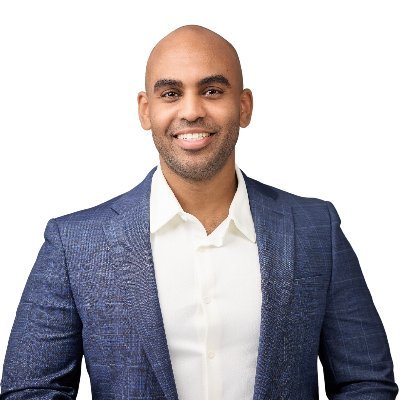
Gedam Tekle is a former U.S. Marine and Oakland Police Sergeant who left law enforcement to build crypto payment infrastructure businesses. He has personally exited two eight-figure companies and helped over 4,000 entrepreneurs build residual income. He is the founder of Dividend Shift.