Published on:
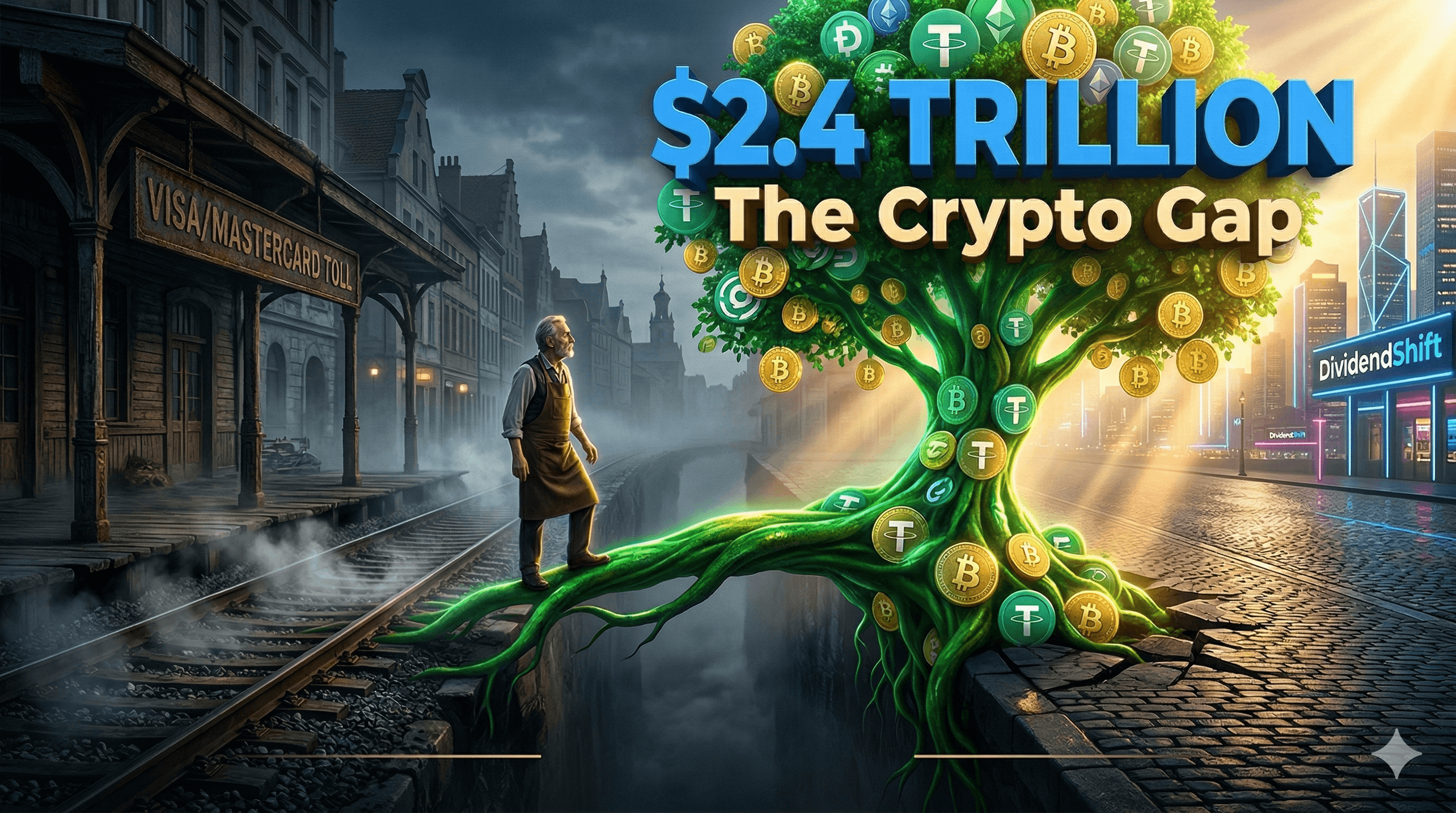
Why 70 Million Americans Own Crypto But Fewer Than 2,300 Local Businesses Accept It


Here are the two numbers that define the current state of the crypto payments market.
Approximately 70.4 million Americans own cryptocurrency. That's 30% of all U.S. adults — roughly the same share of the population that owns a dog.
Approximately 2,300 U.S. businesses accept Bitcoin as direct payment at the local level. Against 33.2 million small businesses in the country, that's a penetration rate below 0.01%.
The ratio: roughly 24,000 crypto holders for every accepting business.
This is not a niche gap. It is one of the largest documented mismatches between consumer demand and merchant infrastructure in the current U.S. payments landscape. And it requires an explanation — because it isn't the result of low consumer interest, regulatory prohibition, or a technology that doesn't work.
It's the result of three specific friction points that kept merchants out. All three have been resolved. Most merchants don't know it yet.
This article explains the gap: where it came from, what closed each friction point, why the gap persists despite those closures, and what the gap means for the people positioned to close it at the local level.
The Three Friction Points That Created the Gap
The Deloitte/PayPal 2022 survey of 2,000 retail executives identified the top barriers to merchant crypto adoption with specificity.
The three that explain the gap are volatility exposure (cited by 36% of merchants), integration complexity (cited by 45%), and regulatory uncertainty (cited by 37%).
These aren't abstract concerns.
Each one describes a real problem that existed when the survey was conducted — and each one has since been substantially resolved by specific technological and legislative developments. The gap persists not because the problems are unsolved. It persists because the solutions haven't been distributed to the people making merchant-level decisions.
Friction Point 1: Volatility
The merchant objection to price volatility runs like this: if a customer pays with Bitcoin and the price drops 20% overnight, the merchant takes a loss on that transaction's value. For any business running on thin margins, that's an unacceptable operational risk.
This objection described how early crypto payment processing worked in 2012. It has no operational relationship to how the technology functions in 2026.
Modern payment processors lock the USD exchange rate at the exact moment the invoice is generated. The customer sends crypto. The processor converts it instantly. The merchant receives the dollar amount that was displayed on the receipt.
BitPay documents this directly: the merchant generates the invoice in their settlement currency, the customer pays at a locked-in exchange rate, and the merchant settles in fiat.
Coinbase Commerce describes the same mechanism: automatic volatility-free conversion to USDC at the time of payment. ForumPay guarantees no slippage through instant confirmation and conversion to USD, with a 99.99%+ approval rate.
The operational analogy that merchants find clearest: accepting a credit card from a foreign tourist. The tourist pays in euros. Visa converts it. The merchant receives dollars. The merchant has zero euro exposure. No one describes a U.S. restaurant as "taking on currency risk" because it accepts Visa payments from European visitors. Crypto payment processing is structurally identical — different input currency, dollar output, instant conversion.
For stablecoins, the volatility conversation doesn't arise at all. USDC — issued by Circle, backed 1:1 by cash held at regulated financial institutions and short-dated U.S. Treasuries managed by BlackRock, audited monthly by Deloitte — maintains a dollar peg with daily fluctuation between $0.9990 and $1.0016. When a customer pays with USDC, there is no conversion. One USDC is one dollar. The merchant receives a digital dollar that settles in minutes. Bitcoin's price that day is irrelevant.
The NCA/PayPal January 2026 survey confirmed what the technology has made possible: 90% of merchants said they would accept crypto if they could convert instantly to fiat. The instant conversion already exists. The barrier is awareness, not capability.
Friction Point 2: Integration Complexity
The second friction point is the assumption that adding crypto payment acceptance requires a merchant to understand cryptocurrency — wallets, private keys, custody decisions, exchange accounts. That assumption is accurate if you're describing what it takes to own and manage crypto as an asset. It has no relationship to what it takes to accept crypto as a payment.
Owning cryptocurrency and processing cryptocurrency as a payment are technically distinct operations. The merchant facing integration complexity has conflated them.
The modern crypto payment terminal or software integration handles every technical component on the backend.
The merchant-facing experience is functionally identical to accepting a digital payment of any kind. A transaction comes in. It processes. Confirmation appears. Funds move to the bank account. There is no crypto wallet to manage, no private key to protect, no exchange rate to monitor.
Integration with existing point-of-sale systems has reached platform parity with traditional card processing for most major commerce infrastructure. PayPal's 2025 crypto payment product offers plug-and-play functionality across its 29 million merchant network. Coinbase Commerce, BitPay, and NOWPayments all provide pre-built integrations for Shopify, WooCommerce, Magento, and most major e-commerce platforms. Stripe's stablecoin payment capabilities operate through its existing API — the same one millions of developers already use.
For physical retail, managed point-of-sale terminal deployment removes the integration question almost entirely.
The operator places a configured device. The merchant uses it the same way they use any payment terminal. The technical infrastructure is maintained by the processor, not the merchant.
The 45% of merchants who cited integration complexity as a barrier in 2022 were accurately describing the landscape at that time. The integration complexity barrier has been substantially reduced by platform investment in the intervening four years. Merchant perception hasn't updated at the same pace.
Friction Point 3: Regulatory Uncertainty
The third friction point was the most legitimate of the three — and the one that kept the most sophisticated merchants out.
For most of the past decade, the regulatory classification of cryptocurrency and stablecoins in the United States was genuinely ambiguous. The SEC and CFTC had unresolved jurisdictional disputes over which digital assets qualified as securities, which were commodities, and what compliance framework applied to businesses processing them. That ambiguity was a real risk for any merchant or operator whose business model depended on a stable regulatory environment.
The GENIUS Act, signed July 18, 2025, resolved the core of that ambiguity. It is the first comprehensive federal framework for digital assets in U.S. history. The vote — 68 to 30 in the Senate, 308 to 122 in the House — reflects a bipartisan consensus that did not exist three years ago.
The key provisions are specific. Stablecoins used for payment are explicitly classified as neither securities nor commodities, removing the jurisdictional ambiguity that had most directly affected merchant compliance. Issuers are required to maintain 1:1 reserve backing with U.S. dollar deposits, short-term Treasuries, or cash equivalents.
Monthly independent audits are mandatory. AML compliance and Bank Secrecy Act obligations apply to all issuers. In the event of issuer insolvency, stablecoin holders' claims take priority over all other creditors.
The OCC has granted conditional national trust bank charters to BitGo, Circle, Fidelity Digital Assets, Paxos, and Ripple — placing the core stablecoin and crypto payment infrastructure under formal federal banking supervision. Circle, which issues USDC, is publicly traded, licensed as a money transmitter in 48 U.S. states, registered with FinCEN, and MiCA-compliant in Europe.
Regulatory uncertainty was a legitimate barrier in 2022. It is a substantially weaker barrier in early 2026. The regulatory environment is not without risk — the GENIUS Act's full implementation runs through approximately November 2026, and state-level variation persists. But "regulatory uncertainty" as a reason to pause is no longer the same argument it was two years ago.
The NCA/PayPal January 2026 survey found 58% of merchants still cite regulatory uncertainty as a barrier to adoption. That number describes how many merchants are making decisions based on a risk assessment that was accurate in 2022 and hasn't been updated since.
Why the Gap Still Exists
Three friction points kept merchants out. All three have been materially addressed by technology and legislation that has been live and documented for 12 to 18 months.
The gap persists anyway.
The explanation isn't complicated. Market conditions change faster than market awareness. The instant conversion infrastructure was built before the merchant population understood it was available. The GENIUS Act passed before most small business owners read anything about it. The stablecoin reserve structure was documented and audited before the barbershop owner down the street had any reason to look for it.
The result is a documented mismatch between what is true about crypto payment infrastructure and what the merchant community believes to be true.
The NCA/PayPal survey captures this directly: 88% of merchants already receive customer requests to pay with crypto, and 69% receive those requests at least monthly. The demand is present at the counter. The merchant perceives the solution as unavailable, risky, or complicated. The solution is available, the risk profile has changed, and the complexity has been managed — but no one in the merchant's information stream has told them that.
This is not a failure of the technology or the regulatory framework. It's a distribution problem.
The information about what changed — the instant conversion, the stablecoin architecture, the federal legislation — hasn't traveled through the channels that reach local business owners making payment infrastructure decisions.
Enterprise merchants with technology teams and legal counsel have updated faster. Local merchants operating without dedicated infrastructure staff have not.
The gap between 70 million crypto holders and 2,300 accepting businesses isn't primarily a technology gap or a regulatory gap anymore.
It's an information gap.
What Closing the Gap Looks Like at the Local Level
The distribution problem described above has a specific solution. It's not a platform roll-out or a marketing campaign. It's a person standing in front of a business owner and walking them through what changed.
That person is a local infrastructure operator — someone who places managed crypto payment terminals at merchant locations and earns a residual on every transaction processed.
The conversation that operator has with a merchant isn't technical. It's corrective. The merchant has three objections. Each one maps to a friction point that has been resolved. The operator's job is to bridge the gap between what the merchant believes is true and what is currently accurate.
The volatility objection: the processor locks the rate and converts instantly. The merchant receives dollars. Bitcoin's price is irrelevant.
The complexity objection: the terminal works the same way any payment device works. The technical infrastructure is managed by the processor.
The regulatory objection: the GENIUS Act passed in July 2025 with bipartisan support. Stablecoins are now explicitly regulated by federal banking authorities, not the SEC. The compliance framework exists.
When all three objections have been answered with specific, documented information — not reassurance, not sales language, but the actual regulatory text and processor documentation — the merchant decision calculus changes.
The merchant who has been declining crypto requests from 69% of its customers on a monthly basis, because the technology seemed risky and complicated and the legal status seemed unclear, is now looking at a solved problem.
This is not a universal close.
Some merchants will not adopt, for reasons unrelated to friction points — lack of interest, established relationships with existing processors, or business profiles that don't generate meaningful crypto transaction demand. Those merchants exist and the model accounts for them.
But the structural gap — 24,000 crypto holders per accepting business — is not a product of merchant indifference. It's a product of merchants operating on outdated information about three specific problems that have since been solved.
The operator who closes that information gap at the local level, one merchant relationship at a time, captures a residual processing income stream from that merchant for the life of the account.
Each placement is a relationship locked before a competitor gets there.
What the Gap Means for Timing
Square Bitcoin launched in November 2025, reaching 4 million merchants globally. PayPal's "Pay with Crypto" launched in July 2025, targeting 20 million merchants. Stripe's stablecoin payment capabilities became available through the existing API following the Bridge acquisition. Visa's on-chain stablecoin settlement reached a $3.5 billion annualized run rate by late 2025, up 460% year-over-year.
These platform launches are the most important data point in the timing analysis — not because they're closing the window for independent operators, but because of what they haven't yet accomplished.
Platform availability and merchant activation are different things. PayPal's 29 million merchant network didn't begin actively processing crypto payments the day the product launched. Square's 4 million merchants didn't deploy Bitcoin payment capability because the feature became available. Availability creates the potential. Activation requires the same local conversation the independent operator is already having.
The window for independent infrastructure placement exists in the gap between platform availability and platform activation — the period when the technology is proven, the regulatory framework is in place, and the merchant buildout at the local level has not yet happened.
That window has a defined close date: the point at which PayPal, Square, and Stripe reduce crypto acceptance to a default checkbox on every merchant dashboard, removing the need for a dedicated infrastructure conversation.
The estimated timeline, based on current platform deployment trajectories: 12 to 24 months from early 2026.
Crypto payment adoption is projected to grow 82.1% from 2024 to 2026. The Rogers diffusion model places crypto payments at the early majority crossover — past proof of concept, entering mainstream adoption. Historically, the operators who capture durable market position in any infrastructure category do so at the crossover, before saturation, while the merchant relationships are still uncontested.
The gap between 70 million owners and 2,300 accepting businesses is the structural market inefficiency that defines this window.
It will close.
The question is who closes it — and who captures the residual income that flows from the accounts they place while it's still open.
The Dividend Shift Team builds and supports the next generation of crypto payment infrastructure businesses. Founded by former U.S. Marine and Oakland Police Sergeant Gedam Tekle, with two eight-figure exits, the team has helped over 4,000 entrepreneurs place passive income streams into local markets across the country.