Published on:
PayPal Was Founded in 1998. The People Who Got Rich Weren't the Ones Who Bought the Stock
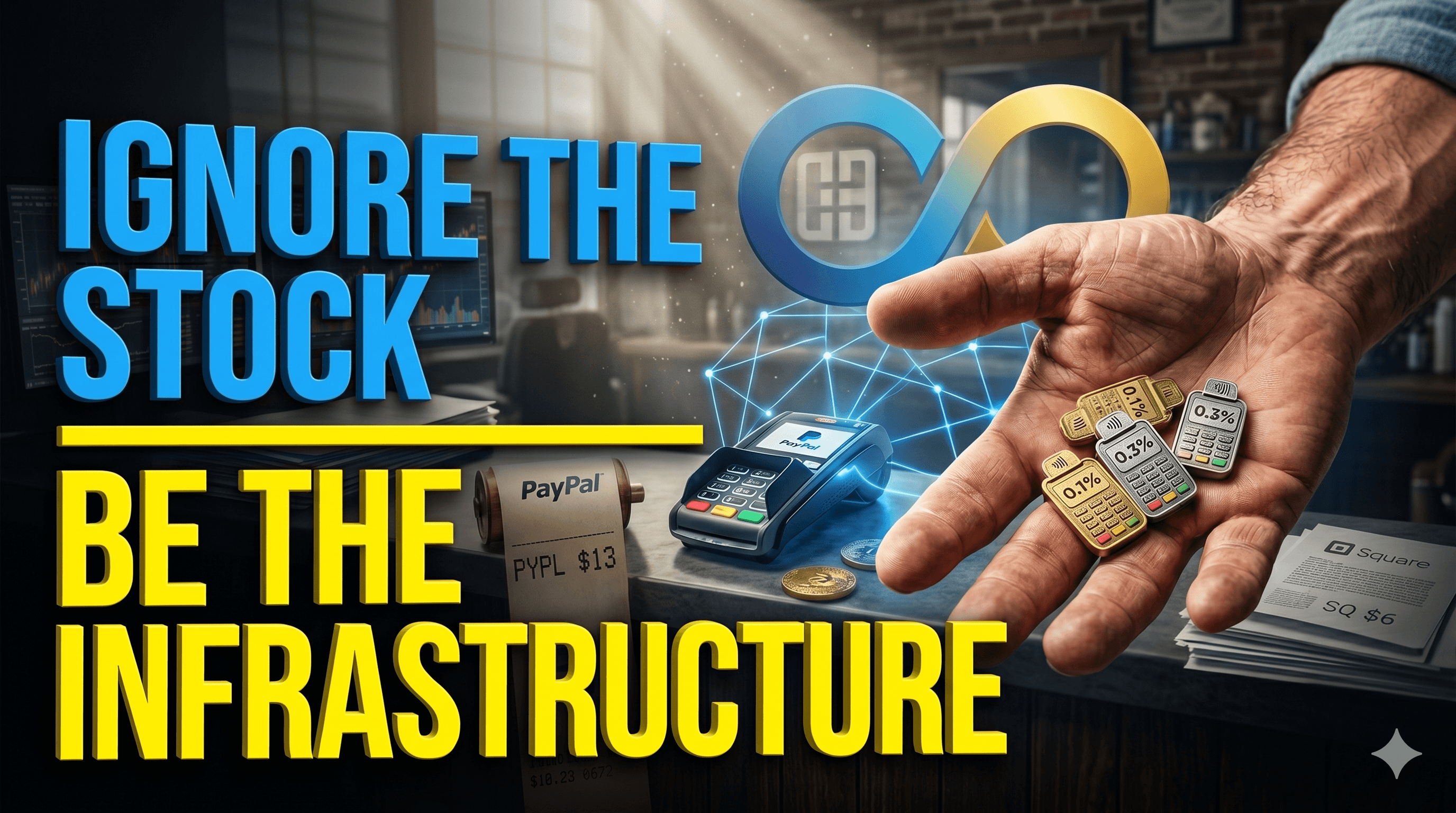
PayPal went public in February 2002 at $13 a share.
eBay bought the whole company eight months later for $1.5 billion.
Early investors made real money. That part of the story is true — and it's the part everyone remembers.
But there's a second story that nobody tells. It didn't involve buying PayPal stock. It didn't involve knowing Peter Thiel personally. It didn't require any connection to Silicon Valley.
It just required understanding where payment infrastructure money actually goes.
The Part Nobody Talks About
When PayPal launched, the internet had a payments problem. Millions of people were buying things online. But most small businesses had no way to accept cards on the internet.
Card-not-present processing — which just means accepting a credit card without physically swiping it — was new, complicated, and expensive to set up. A small business in 1999 that wanted to sell products online had to find a merchant account provider, negotiate a separate internet processing agreement, integrate a payment gateway, and stay compliant with rules that were still being written.
Most of them couldn't do it alone. They needed help.
That's where the processors came in.
The independent agents and merchant services organizations who built their businesses in that 1998-to-2005 window did something very specific. They signed merchant accounts for every small business trying to sell online.
They set up the payment gateways. They handled the compliance paperwork. And every time one of those merchants processed a transaction — every single one, for years — a small residual percentage came back to the agent who placed the account.
Not a one-time fee. A residual. Every month. For the life of the account.
The ISOs and agents who built portfolios in that window weren't famous. You won't find their names in a TechCrunch article. They didn't ring any bells at an IPO. They just collected on every transaction that moved through the infrastructure they built — as e-commerce grew from a curiosity into the backbone of global retail.
That is a different kind of wealth than stock appreciation. Slower to start. Much harder to take away.
Here's the Structural Point
In every major payment technology transition, the headline company gets the press. The infrastructure layer gets the income.
Think about how the money actually moves.
When Visa processes a transaction, three different parties earn simultaneously. The issuing bank takes the interchange fee — 1.5% to 2.1% of the transaction. Visa takes its assessment fee — roughly 0.13% to 0.15%. And the independent agent or ISO who placed that merchant account takes their markup — typically 0.2% to 0.5% per transaction.
That last layer is the one almost nobody talks about. The ISO isn't Visa. But they earn on every transaction Visa processes for their merchants.
They don't care if Visa's stock goes up or down. They don't care which bank issued the card. They earn because the infrastructure they placed is being used.
That is the oldest and most durable model in the payments industry.
Visa and Mastercard built a combined $1.1 trillion in market capitalization doing this at scale. But the ISO and agent layer below them — the people who placed the terminals, signed the merchants, built the local distribution that made the whole network functional — those people built residual portfolios that compounded for decades. Quietly. Without an IPO. Without a single press release.
The Card-Not-Present Window Closed. Something Else Opened.
Here's the part that should make you sit up.
That 1998-to-2005 window for internet card processing closed a long time ago. Every e-commerce site has a payment button now. Stripe makes it a four-line code integration. Square makes it a toggle. The infrastructure is built. The merchant relationships are owned. The ISOs who built portfolios in that era have been collecting residuals for twenty years.
But payment technology transitions happen in cycles. And we're inside one right now.
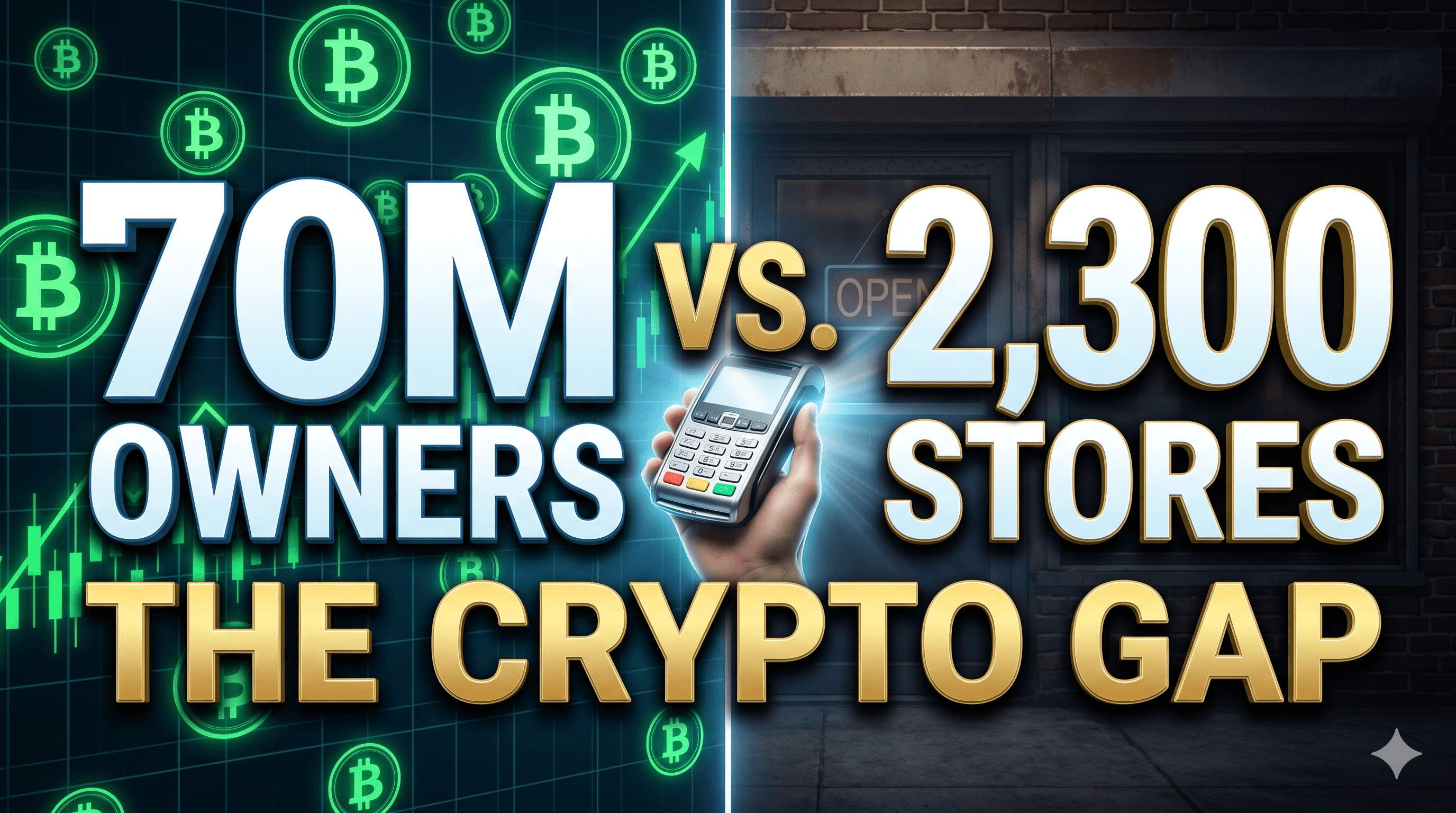
Seventy million Americans own crypto. Fewer than 2,300 local businesses accept it directly. That ratio — roughly 30,000 crypto holders for every accepting business — is the same structural gap that existed between internet shoppers and online payment infrastructure in 1999.
The gap is the opportunity.
The agents building crypto payment terminal portfolios right now are not buying crypto. They're not speculating on price. They're placing infrastructure at local merchants — barbershops, auto shops, specialty retail — and earning a residual percentage of every transaction processed through their terminal, indefinitely.
The merchant receives dollars. No volatility. No conversion headache. The customer pays with the crypto they're already holding. And the infrastructure layer — the agent who placed the device — clips a small percentage of every transaction for the life of the relationship.
That is not a new idea. It is a 40-year-old idea applied to a new payment technology.
Why This Window Is Different From Buying Stock
When PayPal IPO'd at $13 a share, you had to be in the right place, know the right people, or get lucky. Most people who wanted exposure to internet payments had already missed the early entry.
The infrastructure layer is different. You don't need to be first to the IPO. You need to be first to the merchant.
The agent who placed terminals in the early credit card era didn't have insider knowledge. They had a territory and a willingness to walk into businesses before anyone else did. The ISOs who built portfolios in the mid-1980s — when Verifone launched its first modern terminal in 1983 and most merchants still used manual imprinters — weren't financial geniuses. They were early. And they locked in merchant relationships that switching costs protected for decades.
Merchants with installed terminals, trained staff, and integrated systems don't change processors. The J.D. Power data on merchant services shows consistently low voluntary churn. Once the relationship is in place, it stays in place.
Every merchant you place a crypto terminal with today is a residual income stream you likely own for years. And every merchant you place is one fewer available for the next person who enters your territory.
The terminal era for credit card processing ran from roughly 1979 to 1995. That was a 16-year window to build a position before near-universal merchant adoption closed it.
The crypto payment infrastructure window is open now. PayPal launched Pay with Crypto targeting 20 million merchants in 2025. Square Bitcoin reached 4 million merchants globally. Stripe acquired stablecoin infrastructure company Bridge for $1.1 billion — the largest fintech M&A deal in the stablecoin sector. When those platforms finish building their merchant-side crypto toggles, the independent agent's window gets smaller. Not closed — smaller.
The people who get rich in this transition will not be the ones who bought Coinbase stock. They will be the ones who built local infrastructure portfolios before the major platforms made it a commodity.
"But PayPal Made People Rich. Why Not Just Buy Crypto?"
I understand the question. And I want to be straight with you.
Some people bought Bitcoin at $5,000 and made a lot of money. Some people bought at $60,000 and are still waiting. I don't know which window you're in right now — and neither do you.
What I do know is this: the people who got quietly, durably rich in the PayPal era weren't mostly stock buyers. They were infrastructure operators. The processors and agents who built their businesses around internet commerce while everyone else was arguing about dot-com valuations.
That is not a coincidence. It is a structural pattern.
When a new payment technology gains adoption, the infrastructure layer earns from the activity. Not from the price of the asset. Not from picking the right stock. From every transaction that moves through the infrastructure they built.
That pattern held during the Gold Rush — Samuel Brannan became California's first millionaire selling picks and shovels while the miners speculated on which claims would pay out. It held during the internet era — Cisco grew from $70 million in annual revenue to $22.3 billion between 1990 and 2001 by selling the equipment the internet ran on, regardless of which websites succeeded or failed. It holds today in Visa's $1.1 trillion market cap, built entirely on clipping fractions of a percent from transaction volume, globally, indefinitely.
The question was never which company to buy.
The question was always: where does the infrastructure layer sit — and can you get there before it fills up?
If this is the kind of business model you want to understand in more detail — how the placement works, what the income looks like, what the first 90 days actually require — I'd start by watching the overview video at Dividend Shift.
The infrastructure layer is the oldest wealth-building model in payments. And the window to build a position in crypto payments is open right now.
Gedam Tekle is a former U.S. Marine and Oakland Police Sergeant who left law enforcement to build crypto payment infrastructure businesses. He has personally exited two eight-figure companies and helped over 4,000 entrepreneurs build residual income. He is the founder of Dividend Shift.